How Much Does a Meeting Cost? The Formula (and a Calculator)
RedHub AI Editorialupdated September 20, 20264 min read

Jump to a section6
A meeting's cost is attendees × fully-loaded hourly rate × duration in hours × how often it recurs per month. Run that formula on a single recurring meeting and you'll usually land on a number bigger than you expected — big enough that "let's just keep it on the calendar" stops being a free assumption.
TL;DR: Cost = people × average fully-loaded hourly cost × hours × monthly frequency. Plug your own numbers into the calculator below for an instant estimate. A 6-person, 1-hour weekly meeting at $60/hr average runs about $1,440/month. This is a decision aid using only the numbers you enter — not a precise accounting figure, and "fully-loaded" cost runs higher than base salary alone. For the ongoing version of this math across every recurring meeting you run, see the Meeting Cost Calculator ($29).
Meeting cost — quick estimate (illustrative)
The calculator above uses only the numbers you type in — no hidden assumptions, no industry averages baked in. "Fully-loaded hourly cost" means salary plus payroll tax, benefits, and a share of overhead, not gross pay divided by hours worked; that's why the honest number is usually higher than what a quick mental-math version of this formula would produce. Treat the result as a decision-making estimate, not an audit-grade accounting figure.
Breaking down each variable
- Attendees — count who actually attends, including habitual "optional" joiners. If attendance varies week to week, use your realistic average, not the invite's max headcount.
- Fully-loaded hourly rate — use a blended average across attendees if roles differ significantly (a meeting with two directors and four ICs has a much higher blended rate than four ICs alone).
- Duration — the minutes actually spent, not just the calendar block. If a "30-minute" meeting reliably runs 45, price the 45.
- Frequency — weekly ≈ 4.3×/month, biweekly ≈ 2.2×/month, monthly = 1×/month. Use the real cadence, not the nominal one.
Why this number is bigger than people expect
Most people mentally price a meeting off one person's time — their own. The formula reminds you that a meeting's cost multiplies across every attendee simultaneously. A meeting isn't one person's hour; it's N people's hours, spent at the same time, on the same thing. That's the entire reason six-person meetings feel "fine" in the room and expensive on a spreadsheet — the room doesn't do the multiplication for you.
Sanity check: if a monthly total feels too high, verify your fully-loaded rate first — it's the input people most often guess wrong, usually by understating it. If it still feels high after that, that's useful information, not a calculator error.
What a high number does and doesn't mean
From one meeting to your whole calendar
This calculator prices one meeting at a time, which is the right starting point but not the finish line — most people run five, ten, or twenty recurring meetings, and the individually-small ones are often where the real money hides. That's the subject of The True Cost of Too Many Meetings. For a repeatable version of this math across every meeting on your calendar — plus a ranked view of which ones cost the most — the Meeting Cost Calculator does it in one spreadsheet instead of one browser tab at a time.
Pairs well with
Once you've priced your meetings, decide where the freed-up hours should go with the Capacity & Utilization Planner ($49), or redesign the underlying meeting rhythm with the Operating Cadence Engine ($299).
More in this guide
What's the formula for meeting cost?
Attendees × average fully-loaded hourly cost per person × meeting length in hours × how many times per month it recurs. Multiply by 12 for an annual figure.
Is the calculator on this page exact?
No — it's an illustrative estimate based only on the numbers you enter. It's meant for quick decision-making comparisons, not formal accounting.
What hourly rate should I use — salary or fully-loaded cost?
Fully-loaded cost: salary plus payroll taxes, benefits, and overhead. Using base salary alone will meaningfully understate the true cost.
How do I price a meeting with people at very different pay levels?
Use a blended average hourly rate across all attendees, or run the higher-cost attendees' time separately if you want a more precise split.
Does a high meeting cost mean I should cancel it?
Not automatically. It means the meeting deserves the scrutiny you'd give any similar-sized recurring expense — some high-cost meetings earn their price.
How is the Meeting Cost Calculator different from this page's calculator?
This page prices one meeting at a time for a quick estimate. The $29 spreadsheet prices every recurring meeting on your calendar at once and ranks them by real dollar cost.
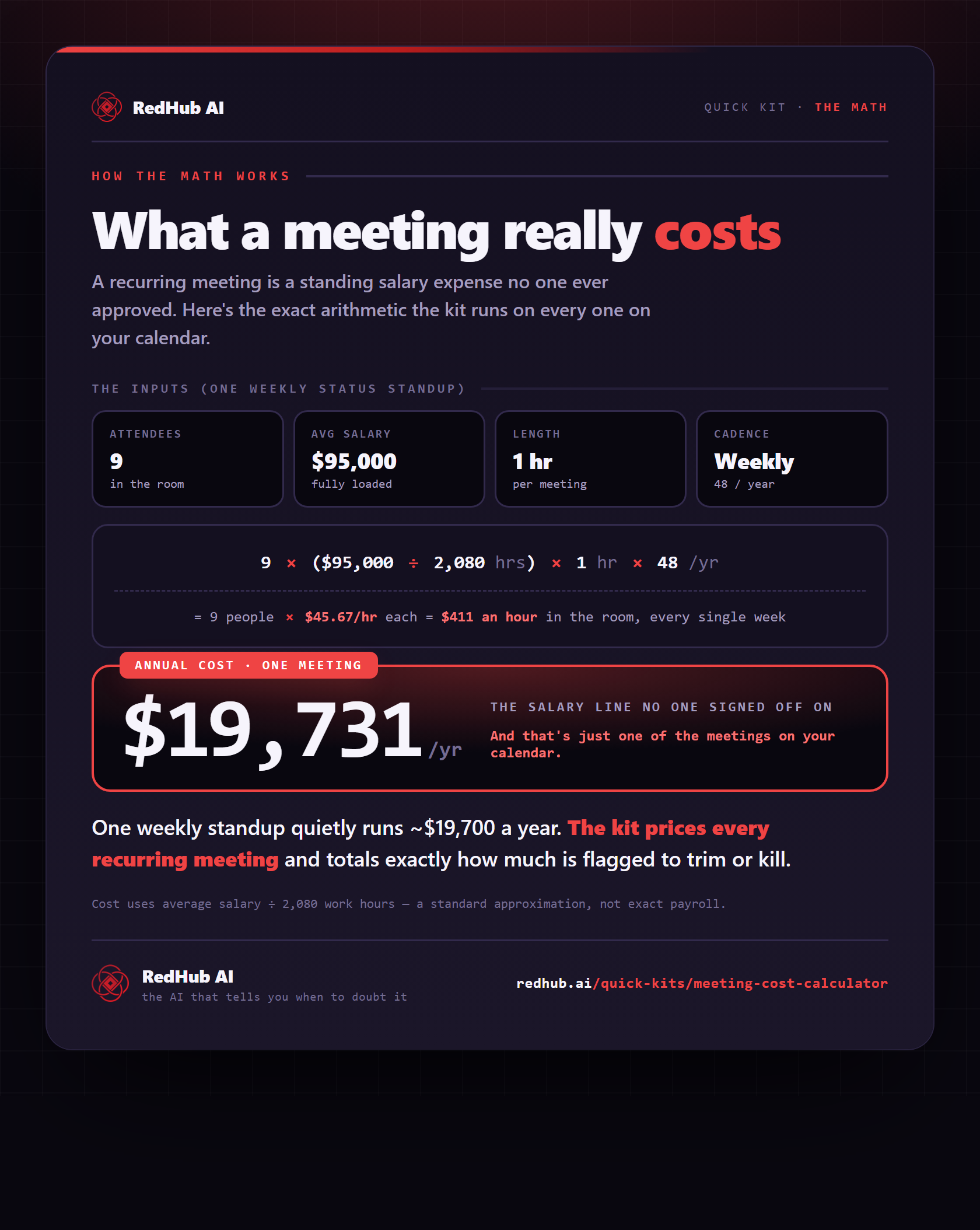
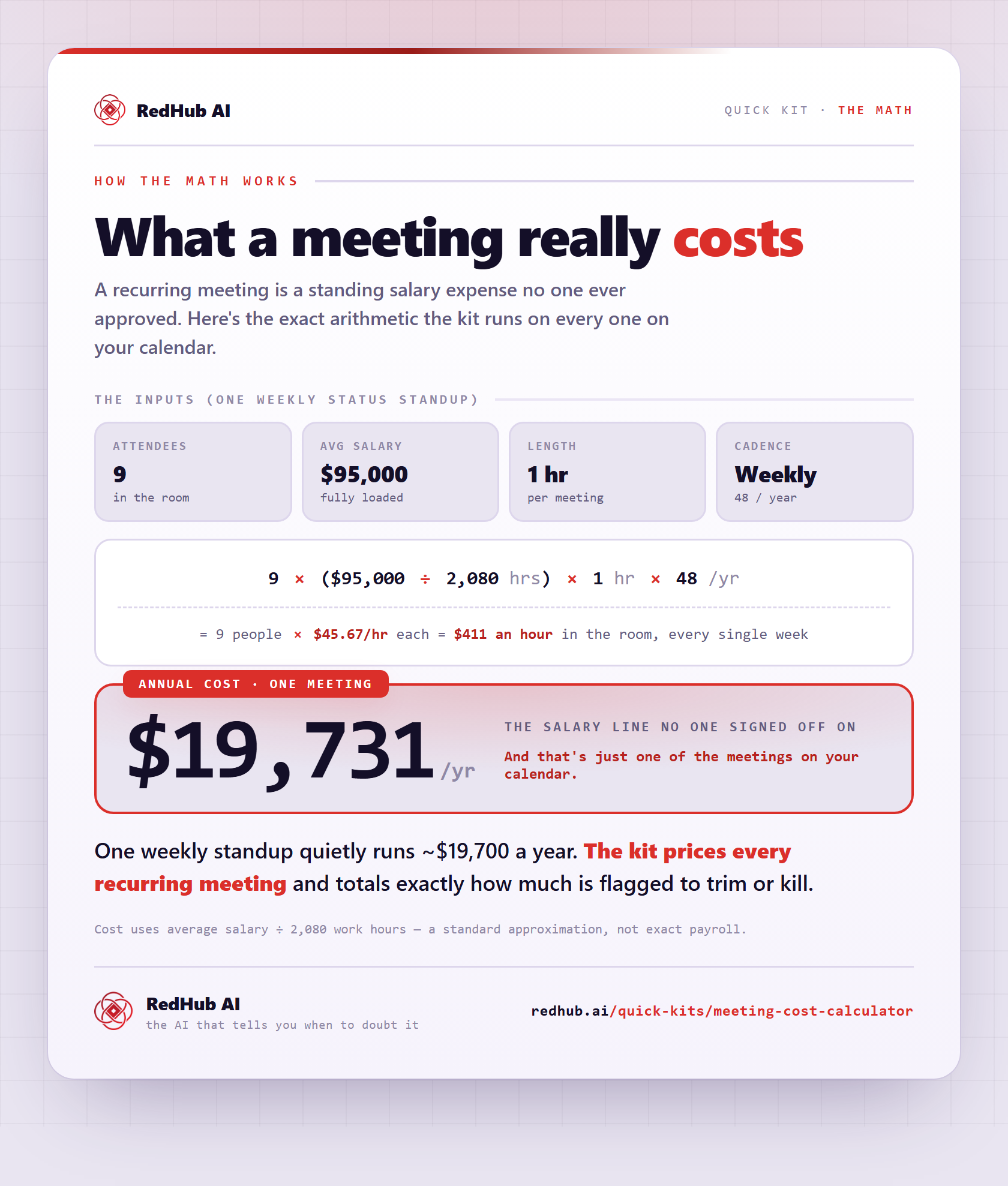
The gate this post refers to, drawn from the tool’s own logic. See the tool.