How to Make a Video With a Real Point of View (Not Just More Information)
RedHub AI Editorialupdated September 20, 20264 min read
Jump to a section7
A real point of view is a stance someone qualified could disagree with — not a summary of facts everyone already accepts. If you can't name who might push back on what you're about to say, you don't have a point of view yet. You have information, and information alone rarely makes anyone remember you.
TL;DR: A point of view is testable: it needs a claim, a reason drawn from real experience, and an acknowledged counterargument. Most experts default to safe, informational scripts because forming and defending an actual opinion feels riskier — but that safety is exactly what makes the video forgettable. Find the opinion first, then build the video around it.
What "Point of View" Actually Means on Camera
A point of view is a claim, not a category. "There are three approaches to onboarding" is a category. "Most onboarding sequences fail because they're written for the company's convenience, not the customer's first week" is a claim — specific, arguable, and clearly the product of having watched a lot of onboarding go wrong. The claim is what a viewer remembers. The category gets forgotten by the next video they watch.
Why Information Alone Doesn't Work
Information is easy to source and easy to replace — a viewer can get the same facts from a search result, a competitor, or increasingly, an AI summary. What they can't get anywhere else is your specific read on those facts, shaped by what you've actually seen go right and wrong. Building a video around information puts you in competition with every other source of that information. Building it around a point of view puts you in a category of one.
Finding Your Real Point of View
Most experts already have opinions — they just haven't isolated them from the surrounding information. Three reliable places to look:
- The mistake you keep correcting. If you find yourself saying "actually, most people get this wrong" in conversations, that reaction is a point of view waiting to be recorded.
- The advice you disagree with. Common wisdom in your field that you think is outdated or incomplete is fertile ground — your disagreement is the opinion.
- The pattern only you've seen. A specific client situation, project, or repeated result that shaped how you think differently than someone without that experience.
The Three-Part Test for a Real Point of View
- The claim. State the opinion in one sentence, without hedging.
- The reason. Tie the claim to something you've actually lived through — not a theory, an experience.
- The counterargument. Name the strongest disagreement a smart person could have, and explain why you still hold your position anyway.
If your script is missing the counterargument step, it usually means the claim isn't specific enough yet to generate real disagreement — which means it's still information dressed up as an opinion.
Structuring a Video Around Your POV
Once the point of view is clear, the video structure almost writes itself: open with the claim, support it with the one real example that makes it credible, address the obvious counterargument, and close with what the viewer should do differently because of it. Resist the urge to hedge the opening with three minutes of context — the claim up front is what earns the rest of the watch time.
Getting Your POV Out of Your Head and Onto the Teleprompter
Most experts lose their point of view somewhere between "I know what I think" and "I have a script." Talking it out with someone who asks the right follow-up questions gets the real opinion out far faster than staring at a blank page. That's the interview step inside the Authority Video Engine ($199) — one of its four Claude Skills interviews you specifically to surface an opinionated outline instead of a generic one, then builds it into an animated deck with a teleprompter so you can go from "I finally know what I think" to a recorded video in about 70 minutes.
Pairs well with: a point of view is easier to defend on camera when it's built on a clear foundation — start with The Founder's Positioning Forge ($59) if your positioning itself still feels fuzzy. Once your POV video is recorded, package it for discovery with the YouTube Packaging & Retention Engine ($99).
More in this guide
What's the difference between a point of view and just information?
A point of view is a claim someone qualified could reasonably disagree with; information is a fact or explanation most people would accept without argument. The claim is what makes a video memorable — the fact alone rarely does.
How do I know if my opinion is specific enough to be a real point of view?
Try to name a specific, reasonable person or camp who would disagree with it. If you can't picture real pushback, the claim probably needs to get sharper and more specific before it's ready to record.
Isn't it risky to state a strong opinion on camera?
Some risk is inherent, but the bigger risk is being forgettable. A safe, hedge-everything video rarely gets remembered or shared — a clear, well-supported opinion is what actually earns trust, even from people who disagree with parts of it.
What if I genuinely don't have a strong opinion on my topic yet?
Then it's not time to record that topic yet. No process or tool can manufacture a real point of view — it has to come from your own experience. Pick a topic where you actually have one, or spend more time forming a view before scripting.
Do I need a counterargument in every point-of-view video?
It's not mandatory, but naming and answering the strongest objection is usually what separates a confident, credible opinion from one that sounds one-sided or unconsidered.
How can an interview process help me find my point of view faster?
Being asked specific follow-up questions surfaces opinions people already hold but haven't articulated — it's often faster and more accurate than trying to write a point of view cold from a blank page.
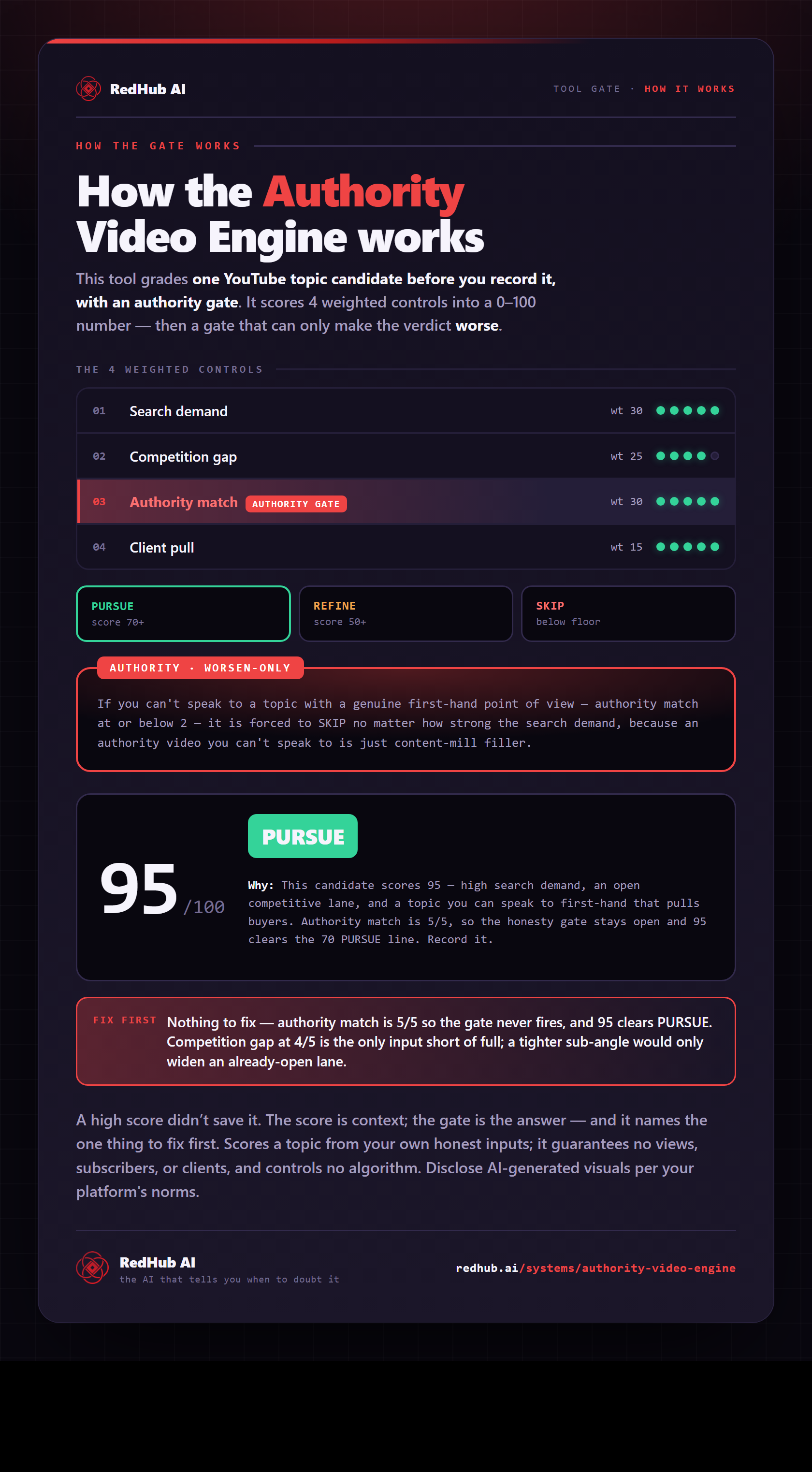
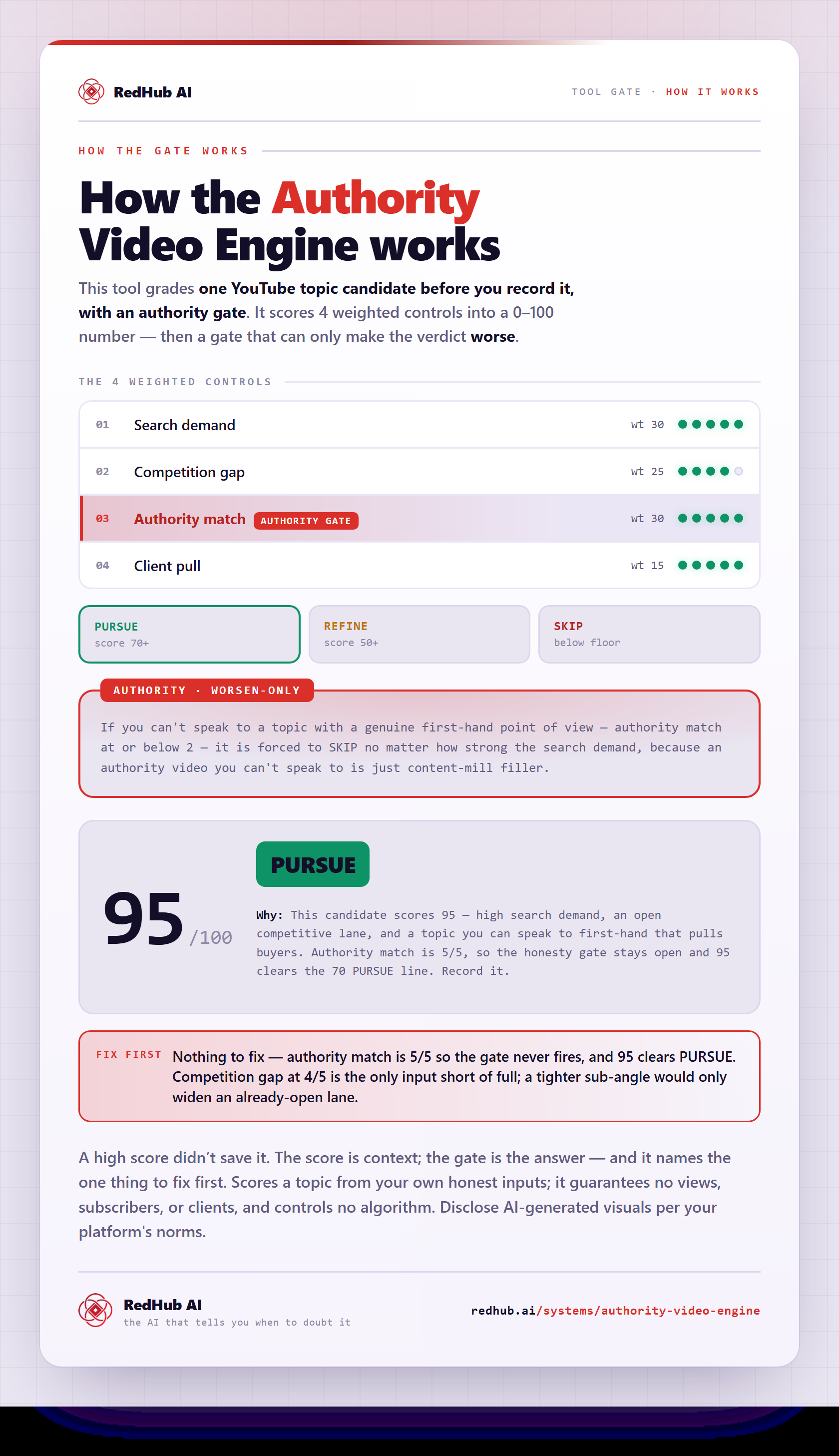
The gate this post refers to, drawn from the tool’s own logic. See the tool.