How to Reduce LLM Token Costs (Without Wrecking Quality)
RedHub AI Editorialupdated October 4, 20266 min read

Jump to a section7
The cheapest way to reduce LLM costs is to stop paying for tokens that do no work: a system prompt padded with dead instructions, retrieved documents the answer never uses, chat history re-sent long past the point it helps, and answers longer than anyone reads. Cut those, cache what repeats, and only then route easy tasks to a cheaper model. Downgrading every call to a weaker model is the blunt lever, and pulling it first can cost more in rework than it saves.
TL;DR: Find which side of your bill is bigger, then cut there. At Anthropic's October 2026 rates for Claude Sonnet 5.5, input outweighs output only when a call sends more than five input tokens per output token. Cache fixed context, batch work that can wait, trim the system prompt, tighten retrieval, cap history, constrain answer length and route simple tasks to a cheaper model, testing each change on real examples. Model the before and after with the Token Economics Workbook ($59). Related: what a token is and why input and output cost differently.
Find the bigger half first
Every call has an input side and an output side, and they are priced differently. On Anthropic's price sheet for Claude Sonnet 5.5, as of October 2026, output costs $10 per million tokens and input $2. Divide one by the other and you get the break-even: input costs more than output only when a call sends more than five input tokens for every one it gets back.
Pull a week of usage and compute that ratio per feature. A document classifier sending 8,000 tokens to get a 50-token label sits far above five, so input is where the money goes. A drafting tool sending 500 tokens to get 2,000 back sits far below, so output is. Chat products drift upward over a conversation as history piles onto the input side. The ratio tells you which cuts below to try first. Your own provider's rates give you your own break-even, so redo the division for each model you run.
Seven cuts, from least to most risky
- Cache what does not change. As of October 2026, Anthropic bills Sonnet 5.5 cache reads at $0.20 per million tokens, a tenth of the input rate, and says a 5-minute cache pays for itself after one read. A 10,000-token reference document sent on 30,000 calls a month is $600 of input uncached and $60 at the cache-read rate, plus the writes.
- Batch what can wait. Anthropic's Batch API takes 50% off both input and output for requests that do not need an answer right away, such as overnight reports or bulk tagging.
- Trim the system prompt. Read it as if you had never seen it and cut every instruction that no longer solves a real problem. Prompts grow one edge case at a time and rarely shrink on their own.
- Tighten retrieved context. If you ground answers in documents, send fewer, better-matched chunks instead of a wide net "just in case." Every extra chunk is billed as input on every call.
- Cap conversation history. Decide how many earlier turns the model needs, and summarize or drop the rest instead of re-sending the whole thread forever.
- Constrain response length and format. Ask for a set length, a structured format or a direct answer. Output is the pricier side, so this cut works on the expensive half.
- Route by task difficulty. Send simple classification, extraction and formatting to a smaller, cheaper model, and keep your most capable model for work that needs its reasoning.
The trap: cutting quality to chase a number
The fastest way to damage an AI feature is to force shorter, vaguer answers or move every call to the cheapest model, whatever the task. Users can notice a worse product before finance notices a smaller bill, and the rework can cost more than the tokens did. Our post on the true cost of an AI agent shows the math. In its illustrative example, raising the share of accepted results from 80% to 90% lowers cost per accepted result more than cutting token cost by a third.
The cheaper model is not always cheaper per task, either. A model with a lower rate can use more tokens to finish the same job, and Anthropic's own docs warn that its newer tokenizer counts about 30% more tokens for the same text. The opposite also happens. Anthropic prices Claude Sonnet 5.5 the same as Sonnet 5 and says, from its own testing, that it costs "up to 30% less per task than its predecessor" and typically needs far fewer tokens to do the same work. Neither claim was measured on your work. The only way to know which way a swap cuts is to run it on your own tasks and count.
Measure before and after
A cost cut is real only if you can show both numbers. Use the same method twice: calls per month, average input and output tokens per call, and current rates, once before the change and once after. Count tokens on a sample of real prompts rather than estimating. Anthropic's token-counting endpoint is free to use, subject to rate limits. The main token-cost guide has a calculator for a quick before-and-after check.
Write down the date and the rate you used for each side. A saving measured at one price can shrink when the price moves, and Google has already said Gemini 4 Argon's introductory $2 and $10 per million will rise to $4 and $20.
When cost cutting is the wrong tool
Sometimes the number that needs fixing is not the per-call cost. The task may not be worth automating at any price, and trimming its tokens will not change that. Our post on the AI automation threshold scores whether one workflow is worth it at all. And no amount of trimming protects you from a runaway loop or a leaked key. LLM API cost control covers the controls that cap spend, with a hard cutoff as the backstop.
Prove the saving before you ship it
The Token Economics Workbook prices a task before and after a change across up to three models, with a cache hit rate you set. Its model-routing matrix, caching patterns and 15 anonymized production teardowns help you pick which cuts to try first.
Get the Token Economics Workbook — $59Pairs well with
Every cut that changes a prompt or a model needs a test, and the Prompt Regression Lab ($89) snapshots a baseline, diffs each prompt change and returns ship, hold or regressed. The AI Cost-Per-Task Calculator ($29) answers the earlier question, whether a task is worth automating at all, with Automate, Review or Skip. Once your cuts are live, the AI Spend Runaway & Billing-Safeguard Gate ($49) grades whether a sudden spike would be stopped.
More in this guide
How do I reduce LLM token costs?
Find which side of the bill is bigger, then trim the system prompt, send only relevant context, cap re-sent history, cache fixed context, batch work that can wait, constrain answer length and route easy tasks to a cheaper model. Test each change on real examples.
Should I cut input tokens or output tokens first?
Whichever side costs more. On Claude Sonnet 5.5, at Anthropic's October 2026 rates of $2 and $10 per million, input costs more than output only when a call sends more than five input tokens per output token.
Will reducing tokens hurt my AI feature's quality?
Caching and batching change only what you pay. Trimming a bloated prompt or oversized retrieval changes what the model sees, so spot-check answers after each trim. Output limits and model downgrades can change answers, so test those before rolling them out.
How much can prompt caching save?
It depends on how often the same context repeats. As of October 2026, Anthropic bills Claude Sonnet 5.5 cache reads at $0.20 per million tokens against $2 for fresh input, plus a write premium when the cache is filled.
Should I just switch to a cheaper model everywhere?
Not across the board. A blanket downgrade can hurt quality on tasks that need real reasoning, and a cheaper model can use more tokens or need more fixing. Route only simple, well-defined tasks down, and measure cost per finished task.
How do I know if a cost-cutting change worked?
Compare projected or measured cost before and after, using the same volume and token-count method both times, and note the rates and dates you used. The main token-cost guide has a calculator for a quick comparison.
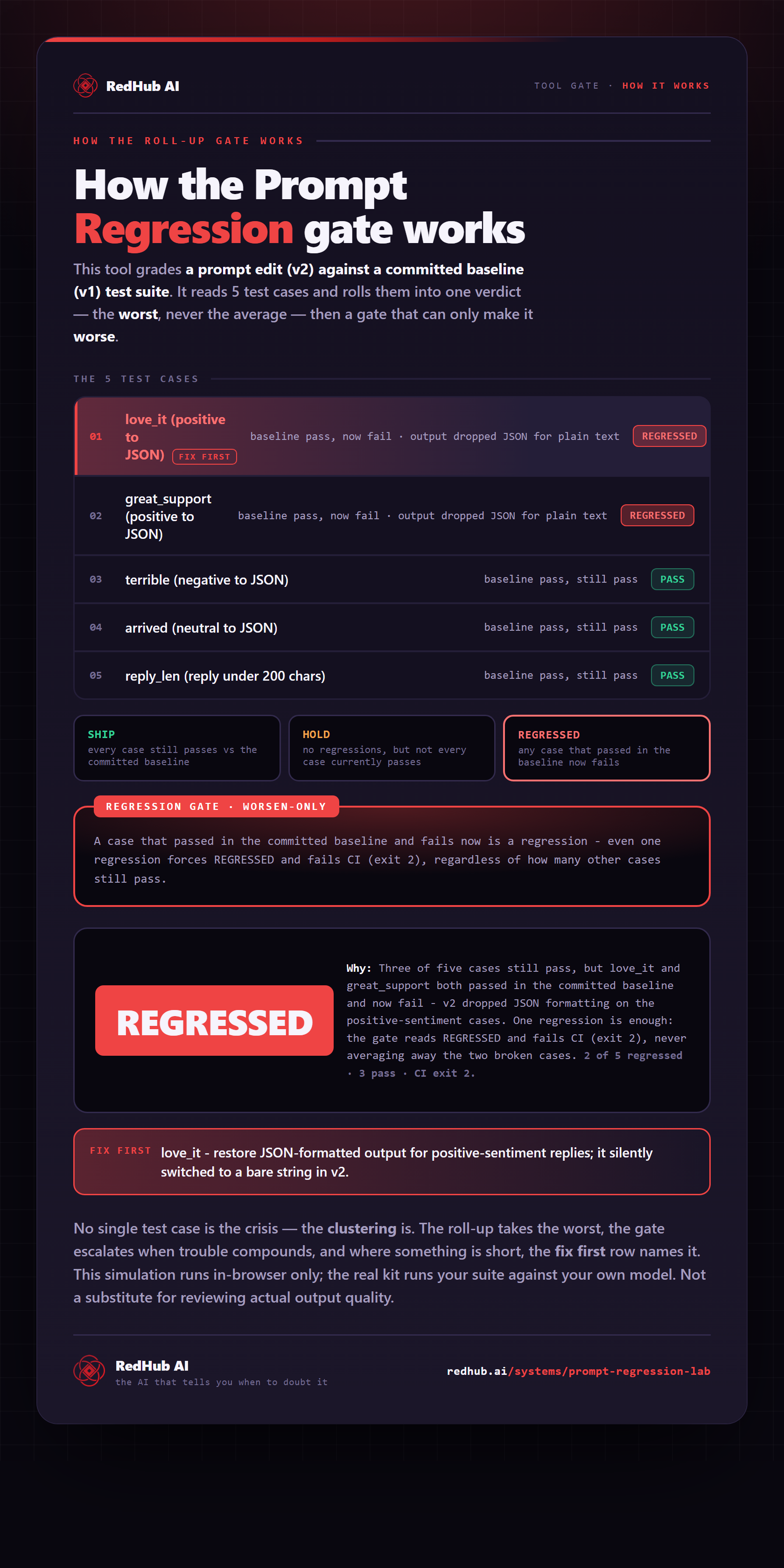
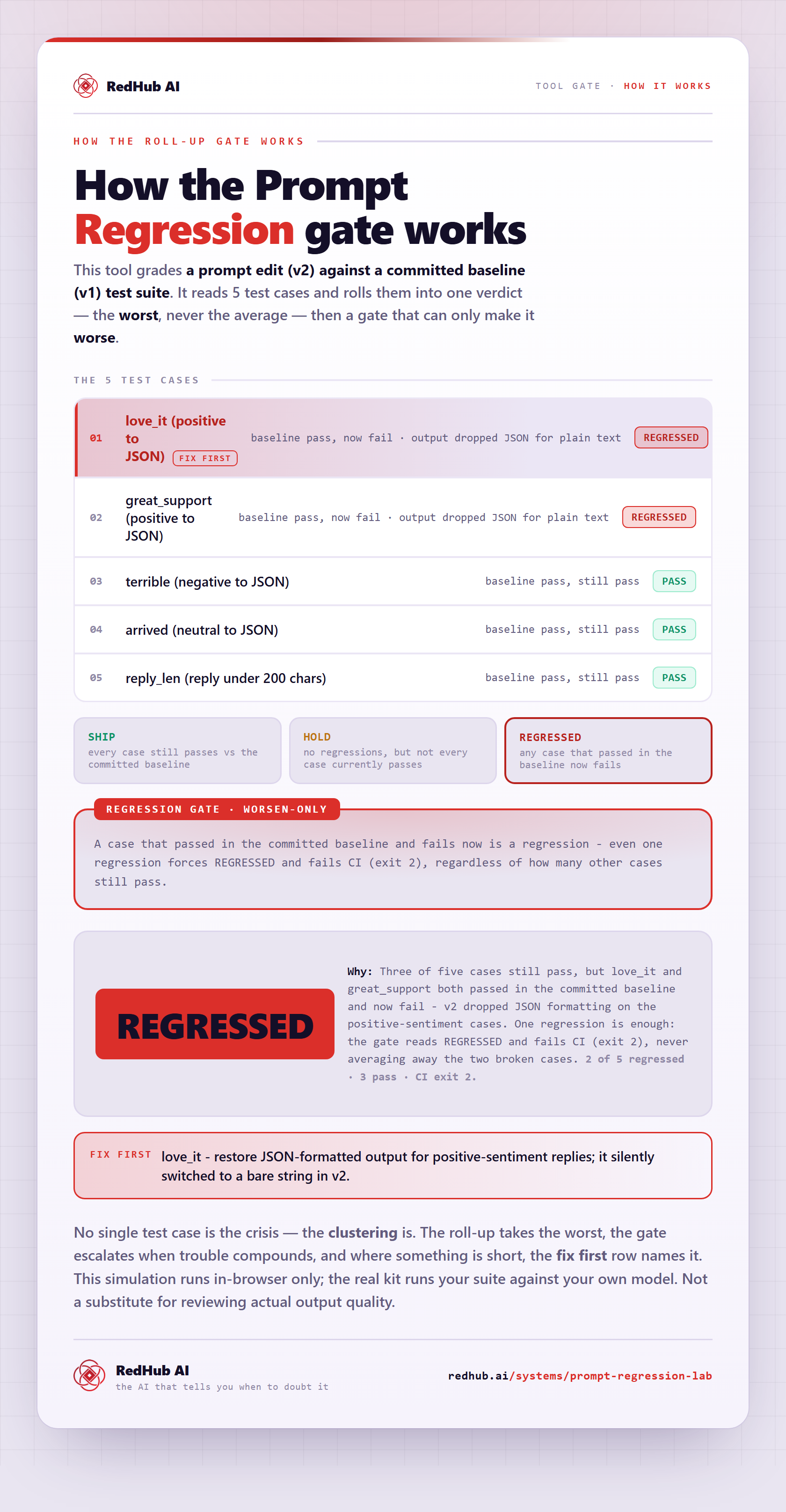
The gate this post refers to, drawn from the tool’s own logic. See the tool.